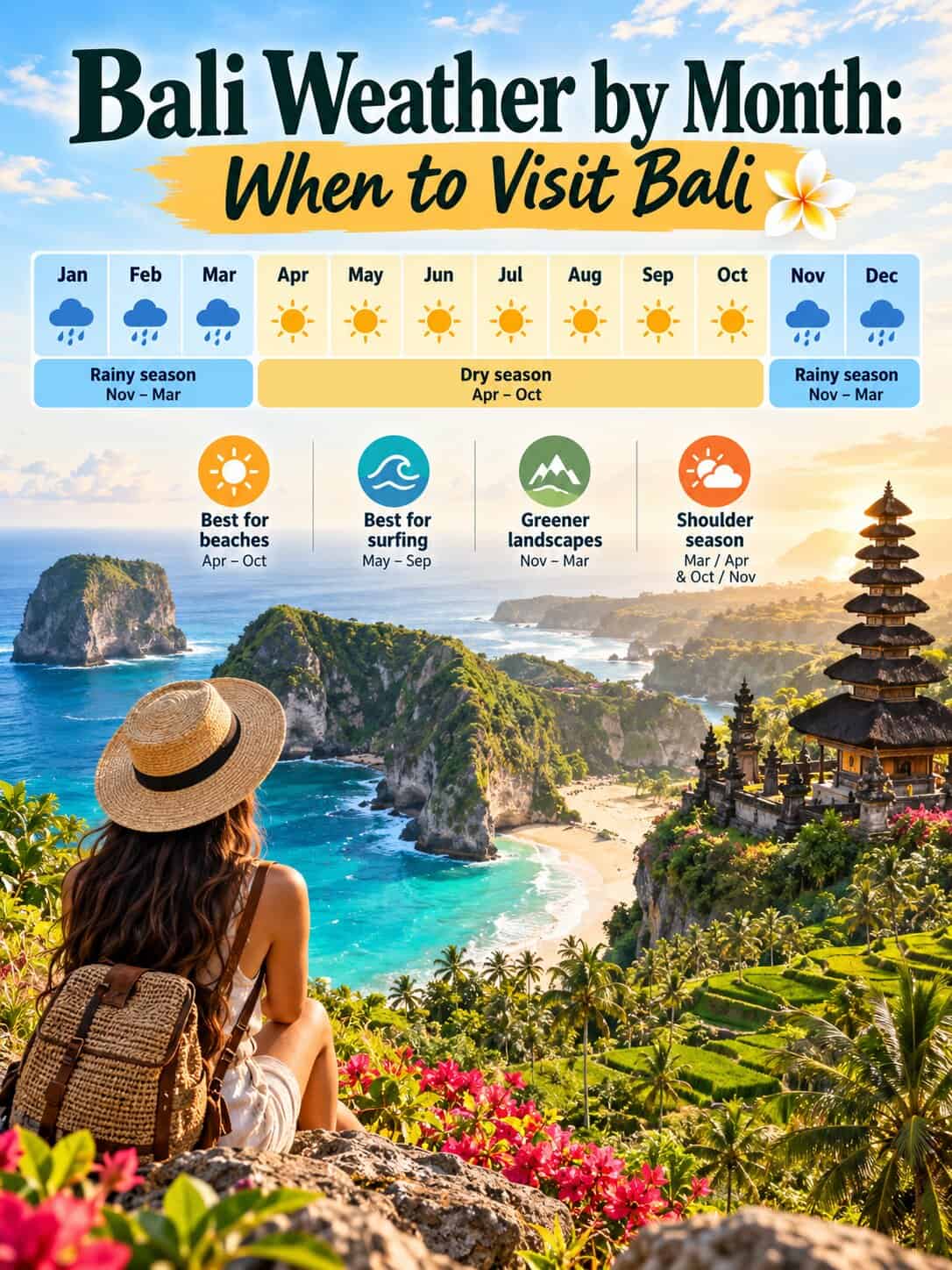
Bali weather by month changes more in rainfall, wind and sea conditions than in coastal temperatures. The usual Bali dry season lasts approximately April–October, while the wetter season runs roughly November–March. For many beach and sightseeing trips, May, June and September combine relatively low rainfall with fewer peak crowds than July–August. This guide uses one consistent Denpasar climate dataset and explains how conditions differ in Ubud, Kintamani, Lovina, Amed and Bali’s southern beach resorts.
For southern beaches, June–September usually offers some of the driest conditions, although July and August are busy. April and October are transition months. In wetter months, showers often arrive in bursts, but heavy rain can also disrupt roads and outdoor trips. For surfing and island fast boats, wind, swell, tide and local weather warnings matter as much as rain.
The numerical table below preserves Climate-Data.org’s 1991–2021 long-term figures for the Denpasar area. These are average climate measurements, not real-time forecasts or guaranteed conditions across Bali. For a multi-island trip, see our Indonesia Weather by Month guide.
Bali Weather at a Glance
| Month | General Conditions | Rainfall & Travel |
|---|---|---|
| January | Hot and humid | High rainfall – wet season |
| February | Hot and humid | High rainfall – wet season |
| March | Hot and humid | Moderate to high rainfall – transition period |
| April | Warm and increasingly sunny | Moderate rainfall – improving |
| May | Warm and humid | Lower rainfall – good |
| June | Warm and relatively dry | Low rainfall – excellent |
| July | Warm and dry | Low rainfall – excellent |
| August | Warm and dry | Low rainfall – excellent |
| September | Warm and relatively dry | Low rainfall – excellent |
| October | Hot and increasingly humid | Increasing rainfall – good |
| November | Hot and humid | High rainfall – wet season begins |
| December | Hot and humid | High rainfall – wet season |
Bali Weather by Month: Rainfall Explained
| Months | Denpasar rainfall in the 1991–2021 table | Practical use |
|---|---|---|
| January–March | 296 / 244 / 210mm | Keep indoor alternatives and flexible outdoor plans |
| April–May | 131 / 74mm | Good transition into the dry season |
| June–August | 57 / 53 / 42mm | Lower rainfall; high demand in July–August |
| September–October | 53 / 68mm | Good sightseeing with increasing transition risk |
| November–December | 154 / 260mm | More rain, but December can be busy for holidays |
These are climatological averages for the Denpasar area, not current weather forecasts for Ubud or the north coast. Rainy-day totals depend on the source’s chosen rain threshold, and datasets from other stations may differ substantially.
Bali Monthly Weather: Temperature and Rainfall
The table below gives verified climate figures for the Denpasar area of southern Bali, sourced from Climate-Data.org’s long-term averages (temperature, rainfall and rainy days: 1991–2021). These numbers describe Denpasar specifically, not the whole island; conditions in Ubud, the central mountains and the north coast can differ noticeably, as covered in the next section.
| Month | Temperature (Day / Night) & Rainfall | Practical Tip |
|---|---|---|
| January | 27.1°C / 24.3°C; 296 mm, ~20 rainy days | Peak of the wet season; keep plans flexible and have indoor backups |
| February | 27.3°C / 24.3°C; 244 mm, ~18 rainy days | Still wet; good off-peak hotel rates |
| March | 27.4°C / 24.3°C; 210 mm, ~19 rainy days | Transitional; pack rain cover but expect sunny spells too |
| April | 27.5°C / 24.6°C; 131 mm, ~16 rainy days | Conditions improve quickly; a good shoulder-season window |
| May | 27.2°C / 24.6°C; 74 mm, ~14 rainy days | Good balance of sun and lower crowds |
| June | 26.5°C / 24.0°C; 57 mm, ~12 rainy days | One of the most reliable months for outdoor plans |
| July | 25.8°C / 23.3°C; 53 mm, ~13 rainy days | Dry and sunny, but a busy travel month – book ahead |
| August | 25.7°C / 22.9°C; 42 mm, ~11 rainy days | Driest month on average; also peak demand for hotels |
| September | 26.3°C / 23.0°C; 53 mm, ~11 rainy days | Excellent weather with slightly fewer crowds than July–August |
| October | 27.1°C / 23.6°C; 68 mm, ~14 rainy days | Mostly dry early in the month; keep later dates flexible |
| November | 27.5°C / 24.2°C; 154 mm, ~16 rainy days | Rain returns; plan indoor alternatives for some afternoons |
| December | 27.3°C / 24.4°C; 260 mm, ~20 rainy days | Wet and one of the busiest months (holiday season) – book early |
Rainy-day counts are approximate; sources vary slightly on the exact figure for some months. Treat them as a general guide to how often showers occur rather than an exact forecast.
Does Bali Have a Dry and Rainy Season?
Yes. The usual Bali dry season runs approximately April–October, with wetter conditions from November–March. August has the lowest rainfall average, 42mm, in the Denpasar 1991–2021 dataset on this page. The value is not a promise of no rain in August; seasonal onset can shift from year to year.
The dry season is usually preferred by travelers who want the highest chance of sunny weather. The rainy season can still be a good time to visit, particularly if you are comfortable with short tropical showers and want to avoid the busiest periods.
Best Months for Different Activities
| Activity | Best Months | Why |
|---|---|---|
| Beaches | June–September | Lowest rainfall and the most reliable sunshine |
| Surfing | Year-round, by coast | Swell and wind depend on which coast and break you choose, not just the season; check local surf forecasts for short-term planning |
| Sightseeing and excursions | April–October | Lower rainfall means fewer disrupted plans |
| Hiking and volcano treks | April–September | Drier trails are easier and safer; mornings are cool year-round, so bring layers regardless of month |
| Ubud day trips | April–October for easier walking; rainy months for lush scenery if you don’t mind showers | Ubud is inland and surrounded by vegetation, so its weather feel differs from the coast |
| Lower-rain, lower-crowd travel | May, June, September | Good weather with comparatively fewer crowds than the July–August peak |
Best Bali Weather for Beaches, Surfing and Hiking
| Activity | Useful season | Important extra factor |
|---|---|---|
| Southern beach holiday | May–September | Swimming flags and sunshine exposure |
| Uluwatu and west-coast surf | Often April–October | Offshore winds, surf height, tide and experience |
| Keramas and selected east-coast breaks | Often better in wetter monsoon periods | Individual surf forecast and reef risks |
| Ubud rice terraces and waterfalls | April–October for easier walking | Rain can improve scenery but make paths slippery |
| Mount Batur hiking | Often May–September | Current trail access, guides, cloud and mountain wind |
| Nusa Penida / Lembongan | Any suitable marine-weather day | Swell, currents, port restrictions |
| Indoor museums, spas and cafés | Year-round | Good alternative on wet afternoons |
No single Bali surf season is optimal for every coast. Safe surfing and swimming depend on local conditions, not the monthly rainfall average alone.
Weather Differences Across Bali
Bali climate varies substantially by elevation, terrain and exposure to monsoon winds. The hot southern coast, greener Ubud valleys and cooler Kintamani/Bedugul highlands do not share identical temperatures or rainfall. For a day trip, consult the forecast for your exact destination, not just the one near your beachfront hotel.
- South coast (Kuta, Seminyak, Nusa Dua, Sanur): The Denpasar-area figures above are broadly representative here – warm, humid, and the most consistent beach weather on the island.
- Ubud: Inland and at slightly higher elevation, so evenings feel noticeably cooler than the coast and the surrounding landscape is lusher. See our Ubud Travel Guide for more on planning time there.
- Central mountains (Kintamani, Mount Batur area): Significantly cooler than the coast, with average temperatures roughly in the 15–25°C range rather than the high 20s, and mist or cloud is common, especially in the morning. Pack a warm layer for sunrise hikes regardless of the season.
- North coast (Lovina and surrounding areas): Generally drier and slightly warmer than the south, since the north coast sits in the rain shadow of Bali’s central mountains. Rain still occurs, particularly around December and January, but typically as shorter showers with more clear mornings.
Bali Climate by Region: Where Conditions Differ
| Area | Typical difference | Traveller tip |
|---|---|---|
| Kuta, Seminyak and Canggu | Warm coast and seasonal west-coast surf | Best general beach window May–September |
| Sanur and Nusa Dua | Warm coast with different tide and reef exposure | Check local currents and swimming flags |
| Ubud and rice terraces | Inland greenery, more moisture and cooler nights | Bring rain cover and grip-friendly shoes |
| Kintamani and Mount Batur | Higher, colder and exposed before sunrise | Warm layer and closed hiking shoes |
| Bedugul and Munduk | Cooler highlands, cloud and mist | Waterproof jacket and extra road time |
| Lovina and North Bali | Often drier in the mountain rain shadow | Do not use south-coast rainfall as a direct proxy |
| Amed and East Bali | Relatively dry coastal pockets | Snorkelling depends on waves and visibility |
Is Ubud Rainier Than Seminyak?
Ubud is farther inland and generally has greener, wetter-feeling surroundings than Seminyak. Microclimates vary, but visitors should plan slippery trails and afternoon rain backups.
How Cold Is Mount Batur at Sunrise?
Pre-dawn mountain conditions can be far colder than the Denpasar figures above. Take a warm jacket, sturdy shoes and rain protection, and follow current guide and volcanic-access instructions.
Rainy Season: What Tourists Should Actually Expect
Bali’s rainy season (roughly November to March) does not mean rain from morning until night. A typical wet-season day can include sunshine, clouds and one or more heavy but short showers; rain may last a few minutes or continue for a few hours depending on the weather system. Expect a higher chance of rain on any given day rather than assuming the whole day is lost.
Planning each day: Schedule outdoor activities (beach time, temple visits, hikes) for the morning when skies are more often clear, and keep afternoons flexible since showers are more common later in the day.
Planning the trip: Avoid itineraries that depend entirely on one outdoor activity happening on one specific day, such as a single sunrise hike with no other date available. Build in spare days or backup plans, particularly in January, February and December, the wettest months in the table above.
Indoor alternatives: Spas, museums, cooking classes, covered markets, cafes and temple complexes with covered areas all work well as rainy-afternoon backups. Many tour operators will also reschedule outdoor excursions around forecast showers if you ask in advance.
The rainy season also tends to mean fewer crowds and sometimes lower accommodation prices, so it is a reasonable trade-off for travelers who are flexible and do not require guaranteed sunshine every day.
Bali Rainy Season: Latest BMKG Forecast
Season-specific forecast, issued in September–October 2026: BMKG anticipates a later-than-normal start of the 2026/27 rainy season in many Indonesian climate zones during a very strong El Niño. The nationwide delayed-onset area covers 61.08% of Indonesia’s land. Much of Bali is expected to begin its rainy season in November or December 2026. A Bali-specific outlook published in August projected approximately 0–100mm for October and 18–150mm for November across many parts of the province, usually below normal.
These ranges are forecasts for broad areas, not a new Denpasar long-term normal and not guaranteed totals at any hotel. A later rainy-season onset does not eliminate short intense downpours.
What Is the Temperature in Bali?
Bali temperature is warm on the coast year-round. The long-term Denpasar values shown above come from a particular dataset and must not be confused with the highest temperature reached on a typical afternoon, which can be roughly 29–32°C in many coastal locations. Ubud is cooler at night, and the mountains can be cold before sunrise. Humidity, wind and direct sun all change how the temperature feels.
Higher areas such as Ubud and the central mountains feel cooler, especially at night and during rain, as detailed in the regional differences above. Pack lightweight clothing for the coast, plus a thin layer for higher elevations or air-conditioned transport.
Bali Weather Month by Month
The figures above give the numbers; the notes below add context for each month beyond the raw data.
January
The middle of the wet season, with the highest average rainfall of the year. When the weather is dry you can still enjoy beaches, restaurants, temples and sightseeing, but outdoor plans are less predictable. Works best for flexible travelers.
February
Still firmly in the wet season. Keep your itinerary flexible and have indoor alternatives ready for the wettest days; beach holidays are possible but not as consistent as in the dry season.
March
A transition month. Rainfall is still significant but trending down, and you may see sunny periods followed by heavy showers within the same day.
April
A noticeable improvement. Rainfall drops well below the wet-season months while temperatures stay warm, making outdoor sightseeing, beaches and day trips easier to plan.
May
Warm, humid and increasingly dry. A strong option if you want good weather without the busiest part of the dry-season crowds.
June
One of the better months overall: warm, comparatively dry and comfortable for beach days, sightseeing, hiking and road trips.
July
Part of the core dry season: warm, sunny and dry, which makes it popular for beaches, sightseeing, surfing and excursions. Expect higher demand for hotels and tours.
August
Typically the driest month on average, with reliable outdoor conditions for beaches, sightseeing and hiking. Also one of the busiest months, so book accommodation and transport ahead.
September
Continues the dry-season pattern with warm, mostly dry conditions, and is often a good compromise between good weather and slightly less peak-season pressure than July or August.
October
A transition toward the rainy season. Early October can still be mostly dry, but rainfall and humidity typically increase as the month progresses, so leave some flexibility in your itinerary.
November
The wetter season returns, with more frequent rain and occasional thunderstorms. Can still suit travelers who prioritize lower-season conditions and are comfortable adapting daily plans to the weather.
December
Hot, humid and wet, with substantial rainfall possible alongside sunny spells. The Christmas and New Year period is also one of Bali’s busiest travel windows, so book accommodation and transport early even though the weather is less predictable.
Bali Weather by Month: What to Plan
| Month | Good trip focus | Weather backup |
|---|---|---|
| January | Culture, spas, flexible beach outings | Indoor breaks during heavy rain |
| February | Ubud and relaxed resort stays | Wet-road delays |
| March | Temples and day trips when weather permits | Transition rain and Nyepi restrictions if applicable |
| April | Beach and inland sightseeing | Occasional showers |
| May | Mixed coast and Ubud trip | Variable local rain |
| June | Beaches, hiking, outdoor activities | Marine swell |
| July | Dry-season beach holiday | Peak crowds and some windy crossings |
| August | Surf and volcano excursions | Book hotels in advance |
| September | Broad sightseeing and beach plans | Tides and surf conditions |
| October | Shoulder-season itinerary | Rain-season transition |
| November | Culture and flexible daily trips | Indoor alternatives |
| December | Holiday travel and resort base | Heavy rain and holiday bookings |
Is Bali Humid?
Bali humidity remains noticeable even in drier months. Indonesia’s national tourism authority describes broad tropical relative humidity around 70–90%, but this is not a Denpasar monthly humidity table. The wetter season generally feels more humid, while sea breezes can improve comfort at the coast. Wear breathable clothing, hydrate and plan breaks from direct sun during long walks.
Does Bali Get Cold?
Coastal Bali is generally warm, but Ubud and the central highlands feel noticeably cooler, particularly at night, and mountain areas such as Kintamani can be genuinely cold before sunrise. A lightweight jacket or long-sleeved layer is worth packing even for a tropical holiday, especially if a sunrise hike is on your itinerary.
What Should You Pack for Bali Weather?
What to pack for Bali weather depends on your route. For the coast, choose lightweight shirts, sun protection, a swimsuit and comfortable footwear. For November–March, add a compact waterproof layer and a dry bag. For Mount Batur, Bedugul and pre-dawn Kintamani trips, pack a warm jacket and closed shoes even if your resort is hot.
Useful essentials include:
- lightweight breathable clothing;
- comfortable walking shoes and sandals;
- swimwear;
- sunscreen, sunglasses and a hat or cap;
- a light rain jacket or compact umbrella;
- insect repellent;
- lightweight long trousers or a modest outfit for temples;
- a thin jacket for cooler areas such as Ubud, the central mountains and air-conditioned transport.
For a complete packing checklist, see our Indonesia Packing List.
What to Pack for Bali Weather: Dry Season vs Wet Season
| Essential | Dry-season beach trip | Wet-season trip | Mountain trip |
|---|---|---|---|
| Breathable clothes | Yes | Yes | Base layer |
| Rain jacket | Useful backup | Essential | Essential |
| Comfortable shoes | Yes | Non-slip soles | Closed hiking shoes |
| Warm jacket | Usually optional | Usually optional | Important before dawn |
| Waterproof phone pouch | Boats and beaches | Rain and boat crossings | Useful |
| Hat and sunscreen | Essential | Essential | Essential outdoors |
| Temple-appropriate clothes | Yes | Yes | Yes |
For Bali weather in November–March, carry a quick-drying change of clothes. For Mount Batur or Kintamani, pack layers for predawn wind rather than relying on coastal resort temperatures.
When Is Bali Most Crowded, and When Is It Cheapest?
July–August often brings high demand for dry-season holidays, while Christmas and New Year can be crowded even in December’s wetter season. May, June and September often balance weather and visitor numbers. Prices still depend on accommodation, events and school holidays. Check the relevant year’s Nyepi restrictions when planning flights or tours, because airport and normal visitor activity can be affected.
Prices depend on destination, hotel and exact dates, so there is no single cheapest month across the board. Periods outside major holiday demand generally offer better availability, and the rainy season can mean lower accommodation prices for travelers willing to accept less predictable weather.
Should You Visit Bali in the Dry Season or Rainy Season?
| Factor | Dry Season | Rainy Season |
|---|---|---|
| Rainfall | Lower | Higher |
| Humidity | Generally lower | Generally higher |
| Beach conditions | Usually more predictable | More variable |
| Outdoor activities | Generally easier to plan | More weather-dependent |
| Greenery | Less lush in some areas | Very lush |
| Crowds | Can be higher | Often lower outside holidays |
Bali Weather and Boat Trips
Fast boats to Nusa Penida, Nusa Lembongan, the Gilis and Lombok depend on wind, wave height, currents and port instructions rather than rainfall alone. A sunny day at Sanur does not guarantee a calm crossing. Leave at least one flexible day before a major international flight, use a reputable operator and follow safety instructions on board.
Bali Fast Boats: Weather Risk by Route
| Route | Main issue | Planning recommendation |
|---|---|---|
| Sanur – Nusa Penida | Strait swell, currents and boarding conditions | Build flexibility and check actual departures |
| Sanur – Nusa Lembongan | Open-water waves and changing wind | Use an operator providing safety equipment |
| Padang Bai – Gili Islands | Longer fast-boat exposure to sea conditions | Do not connect directly to an international flight |
| Padang Bai – Lombok | Port operations, wind and crossing swell | Leave a contingency day |
Dry-season weather does not guarantee flat seas. Marine forecasts and local port advisories take priority over monthly rainfall averages.
Final Advice: Picking Your Month by Trip Type
Bali is a year-round destination, but the right month depends on what you are planning. As a quick reference:
- Beach-focused trip: June–September.
- Best overall weather with fewer crowds: May, June, September, or early October.
- Hiking or volcano sunrise treks: April–September, with a warm layer packed regardless of month.
- Ubud and inland sightseeing: April–October for easier walking; the rainy months if lush scenery matters more to you than guaranteed dry days.
- Budget-conscious or flexible travel: the rainy season (November–March), paired with the planning advice above.
- Willing to accept some rain for lower prices and crowds: November or March, the shoulder edges of the wet season.
Do not choose your travel dates on rainfall alone; weigh crowds, accommodation prices and your planned activities too. Most importantly, remember that Bali’s rainy season does not mean rain from morning until night – even wet-season trips usually include plenty of sunshine.
Related guides: Bandung Weather by Month: Rain, Temperature & Best Time to Visit · Bali Rainy Season: Weather, Rainfall and What to Expect · The Ultimate Bali Currency: Rupiah, Cash, Cards and ATMs · Bali SIM & eSIM Guide: Mobile Data, Prices and Best Options · Essential Bali Travel Insurance: What Coverage You Need
Frequently Asked Questions
What is the best month to visit Bali?
May, June, September and early October offer a strong combination of warm weather and relatively low rainfall with fewer crowds than peak season. July and August are also excellent for weather but busier.
What is the rainy season in Bali?
Roughly November through March, though the exact timing and amount of rainfall vary from year to year.
What is the dry season in Bali?
Roughly April through October, with June through September typically the driest.
Does it rain every day in Bali during the rainy season?
No. A rainy day can contain a short storm and hours of sunshine. Counts of rainy days depend on the measurement threshold and data source, so 20 rainy days in a climate table does not mean 20 days of continuous rainfall.
Is Bali hot all year?
Yes, Bali stays warm throughout the year, though temperature and humidity vary somewhat by location and elevation.
Does Bali get cold at night?
Coastal areas usually stay warm at night, but Ubud, the central highlands and mountain areas such as Kintamani can feel considerably cooler, sometimes cold before sunrise.
Is December a good time to visit Bali?
It can be enjoyable, but it is part of the rainy season with one of the higher average rainfall totals. The Christmas and New Year period is also very busy, so book ahead.
Which is the driest month in Bali?
August has the lowest rainfall average, 42mm, in the Denpasar 1991–2021 dataset on this page. Other datasets and weather stations may differ.
Is Ubud wetter than Kuta?
Ubud is inland and often feels greener and wetter, with cooler nights than the southern coast. Check the specific local forecast before an outdoor day trip.
Is Bali humid in the dry season?
Yes. Relative humidity remains high throughout the year, although wind and lower rainfall can make dry-season conditions feel more comfortable.
When is the best season for Bali surfing?
West and southwest breaks often work best from April to October, while some east-coast breaks perform better in the wetter monsoon. Choose by surf forecast, tide and ability.
What should I pack for Bali weather in December?
Take lightweight clothes, a waterproof jacket, grippy shoes, a phone dry bag and sun protection. Pack a warm layer for mountain sunrise trips.
Does Bali get cold at Mount Batur?
Yes. Pre-dawn wind and the elevation can make mountain hikes much colder than coastal resort areas. Bring warm layers and sturdy footwear.
Can I go to Nusa Penida during the rainy season?
Boats may operate in suitable sea conditions, but rough waves can cause cancellations. Leave a buffer day before any important flight.
Is Bali’s rainy season arriving later this year?
BMKG expects a later onset in many climate zones during the 2026/27 season. It is a dated forecast, not a permanent change to the general climate calendar.
Is the rainy season a bad time to visit Bali?
No, it depends on your priorities. Travelers who are flexible with their daily plans can still have an excellent trip, often with fewer crowds and lower prices.